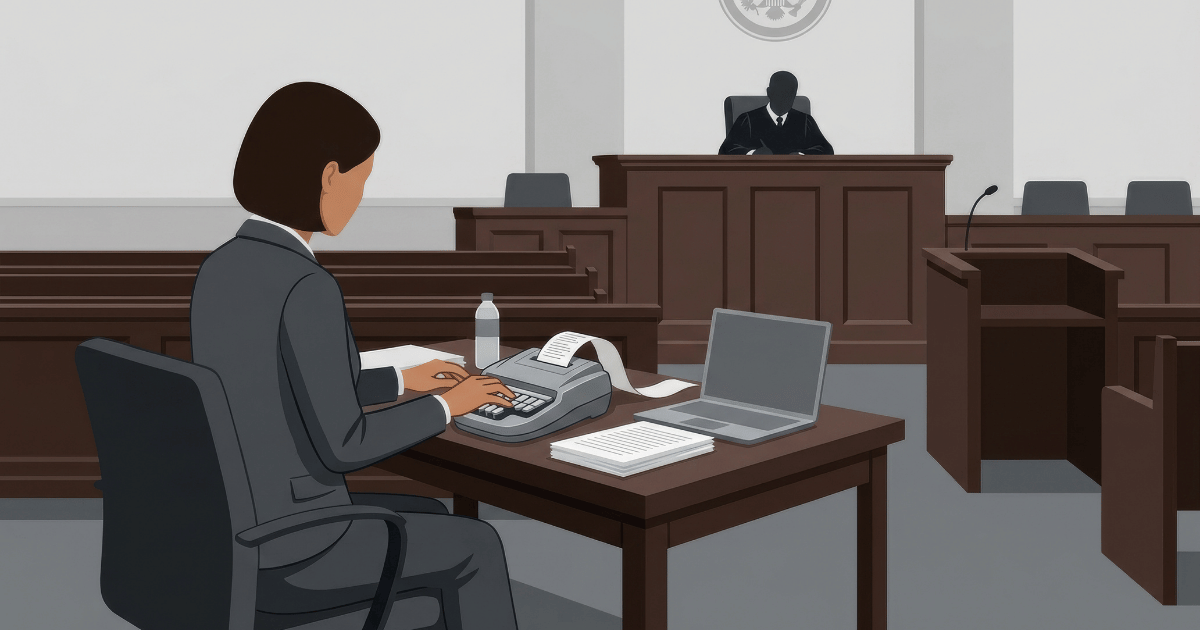
California’s Supreme Court is considering a case that could reshape the future of court reporting. At issue is whether electronic recording should be allowed to create official transcripts in civil court proceedings when a human court reporter is unavailable.
This shouldn’t be an either-or debate.
No one disputes that California faces a serious shortage of court reporters. Thousands of civil, family, and probate hearings take place every year without an official record, leaving litigants without the ability to effectively appeal a decision. That is especially troubling for vulnerable individuals, including victims of domestic violence, whose rights may depend on an accurate transcript of what happened in court.
Electronic court reporting offers a practical solution. Recording technology and speech recognition software have improved dramatically over the past decade. In many situations, digital recording systems can capture every word without fatigue, distractions, or missed testimony. They can also reduce costs and expand access to justice by ensuring that every hearing has a verbatim record.
That doesn’t mean human court reporters should disappear. Experienced reporters do much more than type. They can identify speakers, ask participants to repeat inaudible testimony, resolve technical issues, and certify the accuracy of the final transcript. Their expertise remains invaluable, particularly in complex or high-profile proceedings.
The real question isn’t whether technology can replace humans. It’s whether California can afford to continue with a system that often provides no transcript at all. A perfect human record is ideal, but no record is far worse than a reliable electronic one.
The best path forward is a hybrid approach. Continue recruiting and training court reporters while allowing electronic recording to fill the gaps where qualified reporters simply aren’t available. Technology should not be viewed as the enemy of court reporting. Instead, it should be seen as a tool that protects the public’s access to justice when human resources fall short.